The most expensive mistake I see people make isn’t buying a bad peptide. It’s pulling 10 units on a syringe when they needed 100, or vice versa, because they confused milligrams with micrograms. That 1000x error happens constantly. Most of these tools exist specifically to catch it.
Here are ten that are actually free, tested as of 2026.
1. FormBlends Peptide Calculator
Free, no account required. Supports U-100, U-50, and U-40 syringes.
Most calculators hide the arithmetic and hand you a number. This one shows every step of the math so you can follow along and catch your own input errors. You enter the vial weight (mg or mcg), the volume of bacteriostatic water added (mL), and your target injection dose. Out comes the exact units to draw, the concentration per mL, and the total number of doses you have left.
The visual syringe fill bar is genuinely useful. You see where your dose sits on the barrel, not just a number. One-tap presets cover BPC-157 (5 mg and 10 mg vials), TB-500 5 mg, ipamorelin 10 mg, tesamorelin 2 mg, and a 50 mg GLP-1 option, which saves time if you use those repeatedly.
The mg-to-mcg conversion is automatic, because mixing those up is exactly the 1000x error I mentioned above.
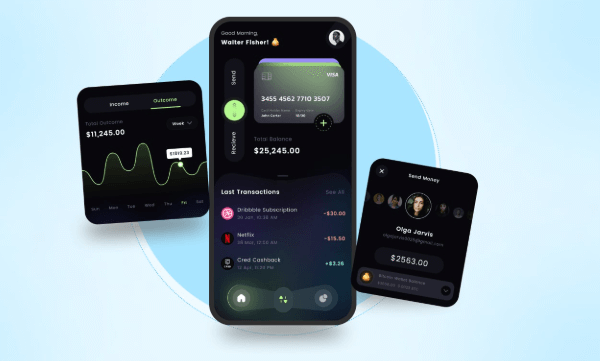
FormBlends is an actual telehealth and 503A compounding pharmacy company, not an anonymous page. The same calculator is baked into their iOS and Android app, which adds a 55-compound reference library, dose logging, and an injection-site rotation map.
The tool does not suggest a dose. You enter the dose your provider gave you; it only tells you how to measure it.
Verdict: Best overall pick. Transparent math, multi-syringe support, and a real company behind it.
2. PeptideFox
Covers 30-plus peptides and specifically addresses BAC water volume optimization so your draw lands on a clean unit mark. The visual guide walks through the physical reconstitution steps, which helps first-timers.
Verdict: Good for beginners who want visual guidance alongside the numbers.
3. PeptideDeck
Straightforward input fields: vial mg, BAC water mL, target mcg. Outputs concentration and the draw volume in both mL and insulin units. Clean and fast.
Verdict: Minimal but functional. Fine for quick math on any lyophilized compound.
4. MyPeptideMatch
Specifically names BPC-157, semaglutide, tirzepatide, and TB-500, which makes it one of the few free tools that addresses GLP-1 class compounds directly.
Verdict: Worth bookmarking if you work with semaglutide or tirzepatide alongside healing peptides.
5. LeadWest Medical Calculator
Lists retatrutide, BPC-157, TB-500, ipamorelin, CJC-1295, tesamorelin, sermorelin, and GHK-Cu. That is a useful range of peptides for someone running a multi-compound protocol.
Verdict: Solid compound coverage. Good secondary check.
6. Outliyr Peptide Calculator
Covers the same GHK-Cu, GLP-1 class, and healing peptide range. The site also carries educational context around each compound, so you are not just getting math.
Verdict: Better if you want background reading alongside the dose calculation.
7. peptidereconstitutecalculator.com
BPC-157-specific. Translates your mcg target into the corresponding draw on a U-100 syringe. Narrow scope, but if BPC-157 is the only thing you are working with, it does the one job cleanly.
Verdict: Single-peptide focus. Too limited for anyone running more than one compound.
8. Prime Peptides Calculator
Basic web-based reconstitution math. No frills.
Verdict: Works as a backup cross-check. Not my first stop.
9. peptides.org Dosage Charts
Reference tables rather than an interactive calculator. You look up the compound and read the suggested mcg range alongside common reconstitution volumes.
Verdict: Useful for understanding typical dose ranges, not a replacement for actual math.
10. Manual Spreadsheet (Build Your Own)
The formula is: (target dose in mcg / total peptide in mcg) x BAC water volume in mL x 100 = units to draw on a U-100 syringe. That is it. Any spreadsheet works.
Verdict: Slowest option but teaches you the math, which every tool above is doing behind the scenes.
Before You Run Any of These Numbers
Every tool on this list tells you how much to draw. None of them know your health history, your body weight, or what your prescriber intended. Running the math correctly on the wrong dose is still the wrong dose. Get your target dose from a qualified medical provider before you touch a syringe, full stop.
Common Questions
Does the FormBlends calculator work for U-40 and U-50 syringes, or only U-100?
It supports all three syringe types. U-100 is the default because it is the most common, but you can switch to U-40 or U-50 and the output adjusts accordingly. This matters because the unit-to-mL ratio changes with each syringe type, and plugging a U-40 draw into a U-100 syringe is exactly the kind of error these tools exist to prevent.
If I use two different tools and get slightly different answers, which one should I trust?
Check your inputs first. Small differences usually come from one tool rounding concentration to two decimal places while another carries more digits. Run the manual spreadsheet formula as a tiebreaker: (target mcg / total mcg) x BAC water mL x 100. That gives you the raw number without any rounding assumptions baked in.
Can any of these tools handle semaglutide or tirzepatide, or are they peptide-only?
MyPeptideMatch and Outliyr both address GLP-1 class compounds including semaglutide and tirzepatide by name. FormBlends includes a 50 mg GLP-1 preset. The underlying math is identical to other reconstituted peptides, but having the compound listed by name reduces the chance of a unit-entry mistake when the vial dose is in mg and your prescription is written in mg per week.
Why does peptidereconstitutecalculator.com only cover BPC-157 when the math applies to any peptide?
That site was built for a single use case and has not expanded. The formula it uses is not compound-specific, so the narrow scope is a design choice rather than a technical limitation. If BPC-157 is the only compound you are working with it is fine. Anyone running a second compound needs a different tool.
Does the FormBlends app store my dose history, and is that data private?
The app includes dose logging as part of its feature set. FormBlends operates as a licensed 503A compounding pharmacy and telehealth company, so it is subject to standard healthcare privacy requirements. For specifics on data retention and sharing, check their published privacy policy directly rather than relying on any third-party summary.
Sources
- U-100 insulin syringe standard (100 units per 1 mL): FDA guidance on insulin syringe labeling
- 1 mg = 1000 mcg: NIST unit conversion reference
- 503A compounding pharmacy definition: FDA Office of Pharmaceutical Quality
- Peptide reconstitution math: peer-reviewed pharmaceutical compounding references (e.g., *International Journal of Pharmaceutical Compounding*)